Review
MindQuell review: liquid memory drops, what is inside, and what the research says
Quick verdict
MindQuell at a glance
Bacopa and lion's mane have small trials, but ginkgo failed a large NIH trial, pine bark evidence is thin, and the page shows no amounts.
- Price
- $39–$59 per bottle
- Refund
- 365 days
- Key ingredients
- 9
- Doses shown
- No
- Form
- Liquid drops, once a day
- Sold by
- Official site (ClickBank)
- Facts checked
- Oct 27, 2026


Badges from the seller's website.
What we like
- All nine ingredients are named
- Bacopa and lion's mane have small human studies
- Very long 365-day money-back guarantee
- Free shipping on 4 and 6 bottles
Watch out for
- No amount per ingredient on the sales page
- Ginkgo did not prevent dementia in a large NIH-funded trial
- The page's references are about melatonin, which is not on the ingredient list
- A second price table on the page links to a different product's checkout
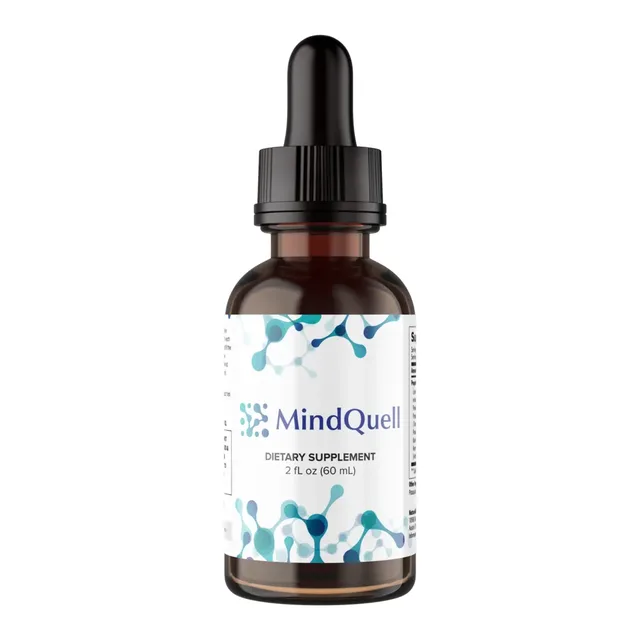
MindQuell is a liquid memory supplement you take as drops once a day, sold through its official website, themindquell.com. It lists nine plant ingredients, including bacopa, lion's mane, ginkgo biloba and pine bark extract. Bacopa and lion's mane have small human studies. Ginkgo, the best studied, did not prevent dementia in a large NIH-funded trial. The page does not show the amount of any ingredient.
It costs $39 to $59 a bottle depending on the bundle, and comes with a 365-day money-back guarantee.
On this page
What is in MindQuell
The official website lists these nine ingredients under "MindQuell contents". The page gives one general claim for all of them: a blend "to support memory function".
| Ingredient | What it is |
|---|---|
| Bacopa monnieri | Herb used in Ayurvedic medicine |
| Lion's mane | Hericium erinaceus mushroom |
| Ginkgo biloba | Leaf extract |
| Pine bark extract | Bark extract rich in plant antioxidants |
| Moringa | Leaf of the moringa tree |
| Tamarind | Tropical fruit |
| Chlorella | Green freshwater algae |
| Spirulina | Blue-green algae |
| Neem | Leaf of the neem tree |
Directions on the page: take "one drop per day", preferably in the morning, directly or in tea, coffee or juice, after shaking the bottle well.
What the research says about the ingredients
Bacopa monnieri
A 2014 review pooled nine randomized trials with 518 people who took standardized bacopa extract for at least 12 weeks. It found a small improvement, mainly in speed of attention. The authors said larger, well-designed trials are still needed.
Lion's mane
One small study in Japan gave lion's mane to 30 adults aged 50 to 80 with mild cognitive impairment for 16 weeks. Their test scores rose while they took it, then fell again four weeks after they stopped.
Ginkgo biloba
The NIH's National Center for Complementary and Integrative Health (NCCIH) says ginkgo has not been shown to prevent or slow dementia. In the Ginkgo Evaluation of Memory study, more than 3,000 people aged 75 or older took ginkgo or a placebo for a median of six years, with no difference in dementia rates. NCCIH also warns that ginkgo may raise bleeding risk in people taking blood thinners such as warfarin.
Pine bark extract
A 2020 Cochrane review looked at 27 trials with 1,641 people using pine bark extract for 10 different chronic conditions. It said small studies and poor reporting meant no firm conclusions on whether it works or is safe for any of them. Only one trial looked at thinking, in people with a brain injury, and it found no clear effect.
Moringa, tamarind, chlorella, spirulina and neem
We did not find human trials on memory for these five ingredients strong enough to cite here.
The bigger picture
NCCIH says direct evidence that dietary supplements can prevent Alzheimer's disease or other dementia is lacking, and that supplements should not delay a visit to a health care provider about memory loss.
We also noticed the "scientific reference" list on the MindQuell page is mostly about melatonin and sleep. Melatonin is not on the ingredient list.
MindQuell price and bundles
These are the prices in the MindQuell order table on the official website when we checked (October 27, 2026). The ClickBank checkout pages we opened showed the same subtotals. Prices and offers can change.
| Package | Price per bottle | Total | Shipping |
|---|---|---|---|
| 2 bottles (2-month supply) | $59 | $118 | + shipping |
| 4 bottles (4-month supply) | $49 | $196 | Free (orders over 3 bottles) |
| 6 bottles (6-month supply) | $39 | $234 | Free |
Orders go through ClickBank, which the page names as the retailer. Shipping outside the United States costs extra.
Refund policy
MindQuell offers a 365-day money-back guarantee. The page says you can return what you have not used for a full refund. Keep your receipt and the bottles.
Who should be careful
- Anyone taking blood thinners such as warfarin (ginkgo, per NCCIH), or any other prescription medicine. Ask your doctor first.
- People who are pregnant or breastfeeding. NCCIH says ginkgo may be unsafe in pregnancy.
- Anyone with new or worse memory problems. NCCIH lists depression, medicine side effects, and thyroid, liver or kidney problems as treatable causes. See a doctor first.
Our verdict
MindQuell names all nine ingredients and has a full-year refund window, which lowers your risk. But only bacopa and lion's mane have even small positive trials, ginkgo failed a large NIH study, and the page shows no amounts. The off-topic references and the second price table also point to a page that has not been carefully kept up. If you try it, check the checkout carefully and talk to your doctor first.
FAQ
Does MindQuell work?
There are no published studies on MindQuell itself. Bacopa and lion's mane have small studies with modest results; ginkgo did not prevent dementia in a large trial. Whether the drops help depends on amounts the page does not show.
How do you take MindQuell?
The official site says to take it once a day, preferably in the morning, directly or mixed into a drink, after shaking the bottle.
How much does MindQuell cost?
On October 27, 2026 the official site listed $118 for two bottles plus shipping, $196 for four, and $234 for six.
What is the MindQuell refund policy?
The official website offers a 365-day money-back guarantee.
Sources
Research and official pages used in this review, last checked Oct 27, 2026. Product details come from the seller's own website; health claims are checked against studies and health agencies.
- MindQuell official website: ingredients, prices, directions and refund policy (checked Oct 27, 2026)
- Kongkeaw C. et al. Meta-analysis of randomized controlled trials on cognitive effects of Bacopa monnieri extract. J Ethnopharmacol, 2014
- Mori K. et al. Improving effects of the mushroom Yamabushitake (Hericium erinaceus) on mild cognitive impairment. Phytother Res, 2009
- NCCIH (NIH): Ginkgo, usefulness and safety
- Robertson NU et al. Pine bark (Pinus spp.) extract for treating chronic disorders. Cochrane Database Syst Rev, 2020
- NCCIH (NIH): 7 things to know about dietary supplements for cognitive function, dementia and Alzheimer's disease
Free download
The Supplement Buyer's Checklist
10 questions to answer before you spend a dollar on a memory, sleep, tinnitus or nerve supplement: doses, refund traps, medicine interactions and sales-page red flags. Plus one useful email a week. Unsubscribe anytime.
No spam. We never sell your email. See our privacy policy.
Health note: this page is for information only and is not medical advice. Statements about dietary supplements have not been evaluated by the Food and Drug Administration, and supplements are not intended to diagnose, treat, cure or prevent any disease. Talk to your doctor or pharmacist before starting a supplement, especially if you take medicines, are pregnant, or have a health condition.