Review
Java Brain review: the coffee add-in, what is inside, and what the research says
Quick verdict
Java Brain at a glance
L-theanine with caffeine has short-term attention studies, but ginkgo failed in a large NIH trial, the doses are hidden, and the sales claims go well past the evidence.
- Price
- $39–$69 per bottle
- Refund
- 60 days
- Key ingredients
- 5 + vitamin complex
- Doses shown
- No
- Form
- Liquid, 1 serving in coffee
- Sold by
- Official site (ClickBank)
- Facts checked
- Oct 27, 2026
What we like
- Simple routine: one serving stirred into your coffee
- L-theanine plus caffeine has small studies on attention
- One-time payment, no auto-ship (per the FAQ)
- Free shipping on 6 bottles
Watch out for
- "Proprietary formula" with no amounts shown
- Ginkgo did not prevent dementia in a large NIH-funded trial
- Strong claims ("scientifically proven to reduce neuroinflammation") with no published study on the product
- Only a 60-day refund, and one passage deducts shipping
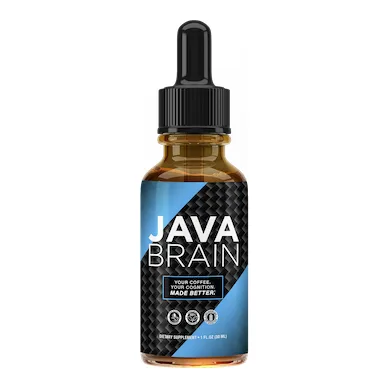
Java Brain is a tasteless liquid you stir into your morning coffee. The official website lists quercetin, ginkgo biloba, chlorogenic acid, camellia sinensis (green tea), L-theanine and a "neuro vitamin complex". L-theanine taken with caffeine has small studies showing better attention for an hour or two. Ginkgo, on the other hand, did not prevent dementia in a large NIH-funded trial. The page does not show the amount of any ingredient.
It costs $39 to $69 a bottle depending on the bundle, and comes with a 60-day money-back guarantee.
On this page
What is in Java Brain
The official website lists these ingredients as its "proprietary formula of super-nutrients". The right-hand column is the seller's own wording, shortened.
| Ingredient | What it is | What the seller says |
|---|---|---|
| Quercetin | Plant compound (flavonoid) | Supports reduced neuroinflammation, brain energy |
| Ginkgo biloba | Leaf extract | Supports improved memory, cognitive function |
| Chlorogenic acid | Compound also found in coffee beans | Supports brain health, healthy blood sugar |
| Camellia sinensis | Green tea plant | Supports neuroplasticity, energy and metabolism |
| L-theanine | Amino acid found in tea | Supports improved focus |
| Neuro vitamin complex | Vitamins (not named) | Supports brain health and immune function |
The page calls Java Brain a "nutritional serum" that dissolves into hot or cold coffee. You add one serving a day.
What the research says about the ingredients
L-theanine (with caffeine)
A 2008 study gave 27 healthy volunteers either a placebo, 50 mg of caffeine, or 50 mg of caffeine plus 100 mg of L-theanine. The combination improved speed and accuracy on an attention-switching task at 60 minutes and made people less distracted during a memory task. This was a short, one-dose test in healthy volunteers. It does not tell us about long-term memory, and we do not know how much L-theanine is in a Java Brain serving.
Ginkgo biloba
This is the best-studied ingredient, and the results are not good. The NIH-funded Ginkgo Evaluation of Memory (GEM) study gave 3,069 adults aged 75 or older 120 mg of ginkgo extract twice a day, or a placebo, for a median of about six years. Ginkgo did not lower the rate of dementia or Alzheimer's disease, including in people who started with mild memory problems.
The NIH's National Center for Complementary and Integrative Health (NCCIH) says it is uncertain whether ginkgo helps thinking in healthy people, and that much of that research is low quality. It also warns that ginkgo may raise the risk of bleeding in people taking blood thinners such as warfarin.
Green tea (camellia sinensis)
NCCIH notes green tea contains caffeine, and that, although uncommon, liver injury has been reported in some people who used green tea extracts, mostly in pill form. Green tea can also interact with some drugs, including the beta-blocker nadolol and the cholesterol drug atorvastatin. Remember that Java Brain goes into coffee, so you are adding it to the caffeine you already drink.
Quercetin and chlorogenic acid
The seller links both to lower brain inflammation. We did not find human trials on memory for either ingredient strong enough to cite here.
The seller's claims
The FAQ says Java Brain is "scientifically proven to reduce neuroinflammation and supercharge cognitive performance", and that many users report fat loss. We did not find any published study on Java Brain itself. NCCIH says direct evidence that dietary supplements can prevent Alzheimer's disease or other dementia is lacking.
Java Brain price and bundles
These are the prices on the official Java Brain homepage when we checked (October 27, 2026). The link from our site opens a video presentation first; the order options appear on the official site. Prices and offers can change.
| Package | Price per bottle | Total | Shipping |
|---|---|---|---|
| 1 bottle (30-day supply) | $69 | $69 | + shipping |
| 3 bottles (90-day supply) | $49 | $147 | + shipping |
| 6 bottles (180-day supply) | $39 | $234 | Free |
The FAQ says it is a one-time payment, not an auto-ship plan. Orders are paid through ClickBank. US and Canada orders arrive in about 5 to 7 business days, according to the FAQ.
Refund policy
Java Brain offers a 60-day money-back guarantee. One section says you can return the product, even empty bottles, within 60 days for a refund "less shipping and handling". The FAQ says to email [email protected] within 60 days. Keep your receipt and the bottles.
Who should be careful
- Anyone taking blood thinners such as warfarin (ginkgo, per NCCIH).
- Anyone taking nadolol, atorvastatin or raloxifene (green tea, per NCCIH), or any other prescription medicine. Ask your doctor first.
- Anyone sensitive to caffeine, or with liver problems (see the NCCIH note on green tea extracts).
- People who are pregnant or breastfeeding. NCCIH says ginkgo may be unsafe in pregnancy.
- Anyone with new or worse memory problems. NCCIH lists depression, medicine side effects, and thyroid, liver or kidney problems as treatable causes. See a doctor first.
Our verdict
Java Brain is an easy habit to add, and one ingredient pairing, L-theanine with caffeine, has some short-term attention research. But its best-known ingredient, ginkgo, failed in a large NIH trial, the amounts are hidden, and the sales claims go far beyond any published evidence. If you take blood thinners or other medicines, talk to your doctor before you try it.
FAQ
Does Java Brain work?
There are no published studies on Java Brain itself. L-theanine with caffeine has short studies on attention. Ginkgo did not prevent dementia in the large GEM trial. Whether Java Brain helps depends on doses the page does not show.
How do you take Java Brain?
The official site says to stir one serving into your coffee, hot or cold, once a day.
How much does Java Brain cost?
On October 27, 2026 the official homepage listed $69 for one bottle and $147 for three, both plus shipping, and $234 for six with free shipping.
Is Java Brain safe with blood thinners?
Ask your doctor. NCCIH says ginkgo, one of its ingredients, may increase the risk of bleeding in people taking drugs like warfarin.
Do memory supplements really work?
No supplement has been proven to prevent dementia, and ginkgo, the most tested herb, failed in a large trial. NCCIH, part of the U.S. National Institutes of Health, also notes that short-term B vitamins have not been shown to improve thinking in older adults. A few ingredients, like bacopa and lion's mane, have small, early studies. The details are in Do memory supplements work?
Sources
Research and official pages used in this review, last checked Oct 27, 2026. Product details come from the seller's own website; health claims are checked against studies and health agencies.
- Java Brain official website: ingredients, prices, FAQ and refund policy (checked Oct 27, 2026)
- Owen GN et al. The combined effects of L-theanine and caffeine on cognitive performance and mood. Nutr Neurosci, 2008
- DeKosky ST et al. Ginkgo biloba for prevention of dementia: a randomized controlled trial (GEM study). JAMA, 2008
- NCCIH (NIH): Ginkgo, usefulness and safety
- NCCIH (NIH): Green tea, usefulness and safety
- NCCIH (NIH): 7 things to know about dietary supplements for cognitive function, dementia and Alzheimer's disease
Free download
The Supplement Buyer's Checklist
10 questions to answer before you spend a dollar on a memory, sleep, tinnitus or nerve supplement: doses, refund traps, medicine interactions and sales-page red flags. Plus one useful email a week. Unsubscribe anytime.
No spam. We never sell your email. See our privacy policy.
Health note: this page is for information only and is not medical advice. Statements about dietary supplements have not been evaluated by the Food and Drug Administration, and supplements are not intended to diagnose, treat, cure or prevent any disease. Talk to your doctor or pharmacist before starting a supplement, especially if you take medicines, are pregnant, or have a health condition.