Review
Zeneara review: what is inside, what it costs, and what the research says
Quick verdict
Zeneara at a glance
Its two best-known ingredients, ginkgo and zinc, have been tested for tinnitus in Cochrane reviews and did not show a benefit, and the sales page does not list any doses.
- Price
- $39–$59 per bottle
- Refund
- 365 days
- Key ingredients
- 7
- Doses shown
- No
- Sold by
- Official site (ClickBank)
- Facts checked
- Oct 27, 2026

Badges from the seller's website.
What we like
- Ingredients named on the official page
- Very long 365-day refund window
- Free shipping on every bundle, per the sales page
- Single bottle available, so you do not have to stock up
Watch out for
- No amount per ingredient on the sales page
- Ginkgo and zinc did not help tinnitus in Cochrane reviews
- Calls its ingredients "clinically proven" without citing studies of them for tinnitus
- Valerian and ginkgo can interact with some medicines
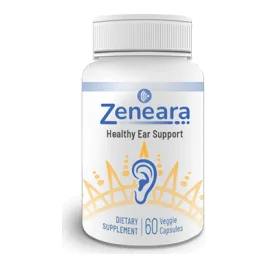
Zeneara is an ear-health capsule sold through its official website. The sales page lists seven ingredients: passionflower, vitamin B6, zinc, ginkgo biloba, a probiotic blend, taurine and valerian. Ginkgo and zinc are the two most studied for tinnitus, and Cochrane reviews of both found no clear benefit. The page does not show the dose of any ingredient.
It costs $39 to $59 a bottle with free shipping, and it has an unusually long 365-day money-back guarantee.
On this page
What is in Zeneara
The right-hand column is the seller's own wording from the official page.
| Ingredient | What it is | What the seller says |
|---|---|---|
| Passionflower | Passiflora incarnata herb | Traditionally used to promote relaxation and ease stress |
| Vitamin B6 | B vitamin | May help support overall health and metabolism |
| Zinc | Mineral | Essential for immune function and wound healing |
| Ginkgo biloba | Leaf extract | Believed to improve circulation, with antioxidant properties |
| Probiotic blend | "Good" bacteria | Supports digestive health and immune function |
| Taurine | Amino acid | Antioxidant properties; supports nerve function |
| Valerian | Root extract | Known for its calming effects |
The page calls these "7 Clinically Proven ingredients" for ear health. Each bottle has 60 capsules. The seller suggests one in the morning and one at bedtime, so a bottle lasts a month.
What the research says about the ingredients
Ginkgo biloba
A 2013 Cochrane review pooled four trials with 1,543 people. In the three trials of people whose main complaint was tinnitus (1,143 people), there was no evidence that ginkgo helped. One trial in people with dementia found a small drop in tinnitus scores, but the authors said its practical meaning is unclear. Side effects were uncommon.
The National Center for Complementary and Integrative Health (NCCIH) agrees: research suggests ginkgo is not helpful for relieving tinnitus symptoms.
Zinc
A 2016 Cochrane review found three small trials with 209 adults. None showed that zinc improved tinnitus. In the largest trial, of older adults, 5% on zinc and 2% on placebo reported improvement, which was not a meaningful difference. The authors concluded there is no evidence that oral zinc helps adults with tinnitus.
Passionflower and valerian
These are calming herbs. NCCIH says a small amount of research suggests passionflower might ease anxiety and help total sleep time, but the results are not definite. For valerian, NCCIH says the evidence for sleep is inconsistent. We did not find human trials on either herb for tinnitus strong enough to cite here. Better sleep and less stress may matter to people bothered by tinnitus, but that is different from treating the sound itself.
Vitamin B6, taurine and probiotics
We did not find human trials showing that any of these improves tinnitus or hearing, strong enough to cite here.
The bigger picture
The U.S. National Institute on Deafness and Other Communication Disorders (NIDCD) says that vitamins, herbal extracts and supplements are often advertised for tinnitus, but none has been proven to work. Instead, it lists hearing aids, sound therapy and counseling such as cognitive behavioral therapy as ways to lessen the impact. Our tinnitus guide explains them.
Zeneara price and bundles
These are the prices on the official website when we checked (October 27, 2026). Prices and offers can change.
| Package | Price per bottle | Total | Shipping |
|---|---|---|---|
| 1 bottle (1 month) | $59 | $59 | Free |
| 3 bottles (3 months) | $49 | $147 | Free |
| 6 bottles (6 months) | $39 | $234 | Free |
Orders of 3 or more include a free stress e-book. When we checked, a pop-up also offered 10% off, and another offered a third bottle free with two. The FAQ says US delivery takes 3 to 5 business days and international orders 8 to 15. ClickBank processes the payment, so that name appears on your card statement.
Refund policy
Zeneara offers a 365-day money-back guarantee. The page says you can get a refund "for any reason" up to 12 months after purchase, "no questions asked". The page does not say whether you must return the bottles or who pays return shipping, so ask support before you send anything back. Keep your receipt and order number.
Who should be careful
- Anyone with sudden hearing loss, ringing in one ear only, or a pulsing sound. See a doctor before trying any supplement.
- People taking blood thinners such as warfarin: NCCIH says ginkgo may raise the risk of bleeding.
- People taking sleep medicines, sedatives or drinking alcohol: NCCIH advises against combining these with valerian.
- Anyone planning surgery: NCCIH says passionflower may interact with some anesthesia drugs.
- People who are pregnant or breastfeeding: NCCIH says ginkgo may be unsafe in pregnancy.
Our verdict
Zeneara is easy to try. You can buy one bottle, shipping is free, and the refund window lasts a full year. But the formula rests on ginkgo and zinc, and the best reviews of research on both found no benefit for tinnitus. The calming herbs may help some people relax, but no doses are shown. If you want to try it, get a hearing test first, check the label with your pharmacist, and keep your receipt.
FAQ
Does Zeneara work for tinnitus?
There are no published studies on Zeneara itself. Cochrane reviews found no clear benefit from ginkgo or zinc for tinnitus, and the NIDCD says no supplement has been proven to help.
What are the ingredients in Zeneara?
The official page lists passionflower, vitamin B6, zinc, ginkgo biloba extract, a probiotic blend, taurine and valerian extract. Doses are not shown.
How much does Zeneara cost?
On October 27, 2026 the official site listed $59 for one bottle, $147 for three and $234 for six, all with free shipping.
What is the Zeneara refund policy?
The sales page offers a 365-day money-back guarantee. It does not say whether bottles must be returned, so contact support first.
Do tinnitus supplements really work?
The U.S. National Institute on Deafness and Other Communication Disorders (NIDCD) says there is no cure for tinnitus, and none of the vitamins, herbs or supplements advertised for it has been proven to work. Approaches with research behind them are a hearing check, hearing aids if you have hearing loss, sound therapy and cognitive behavioral therapy. Our tinnitus guide explains each one.
Sources
Research and official pages used in this review, last checked Oct 27, 2026. Product details come from the seller's own website; health claims are checked against studies and health agencies.
- Zeneara official sales page: ingredients, prices, shipping and refund (checked Oct 27, 2026)
- NIDCD (NIH): Tinnitus
- Hilton MP et al. Ginkgo biloba for tinnitus. Cochrane Database Syst Rev, 2013
- Person OC et al. Zinc supplementation for tinnitus. Cochrane Database Syst Rev, 2016
- NCCIH (NIH): Ginkgo
- NCCIH (NIH): Valerian
- NCCIH (NIH): Passionflower
Free download
The Supplement Buyer's Checklist
10 questions to answer before you spend a dollar on a memory, sleep, tinnitus or nerve supplement: doses, refund traps, medicine interactions and sales-page red flags. Plus one useful email a week. Unsubscribe anytime.
No spam. We never sell your email. See our privacy policy.
Health note: this page is for information only and is not medical advice. Statements about dietary supplements have not been evaluated by the Food and Drug Administration, and supplements are not intended to diagnose, treat, cure or prevent any disease. Talk to your doctor or pharmacist before starting a supplement, especially if you take medicines, are pregnant, or have a health condition.